
Jesse Hicks of The Verge presumably visited the Trinity Site and the Very Large Array in a single day. An a article titled “Prometheus in the desert: from atom bombs to radio astronomy, New Mexico’s scientific legacy” he compares the destruction of the trinity site with the more peaceful achievement of the Very Large Array.
The VLA captures the imagination in much the same way as Trinity, but without the latter’s dubious legacy. If Trinity represents an omega point of applied science — the almost inevitable outcome of work hypothesized by Fermi and Szilard, warned of by Einstein, and executed by Oppenheimer and his fellows — the Very Large Array epitomizes pure science, motivated only by inexhaustible curiosity. Yet that curiosity, that yearning to better know the world around us, produced a scientific apparatus unique in the world.
It’s not a good introduction for those not from New Mexico. It reminds me that I need to try to visit the Trinity site during one of it’s next open houses and the next time I drive by the VLA I need to actually stop and visit.

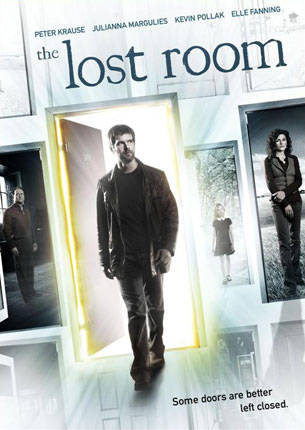 I saw the Lost Room expecting it to be some cheesy SciFi channel B movie. Instead I found the mini series has a good story, good acting and I couldn’t stop watching until I found out what happened at the end.

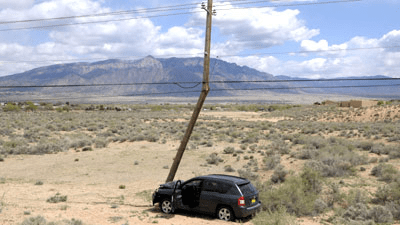 Police in the US are baffled after a woman managed to drive her car into a telegraph pole in the middle of a wide-open desert.
 Doesn't Fit In